Studioserie 'Elements of Dry Earth'
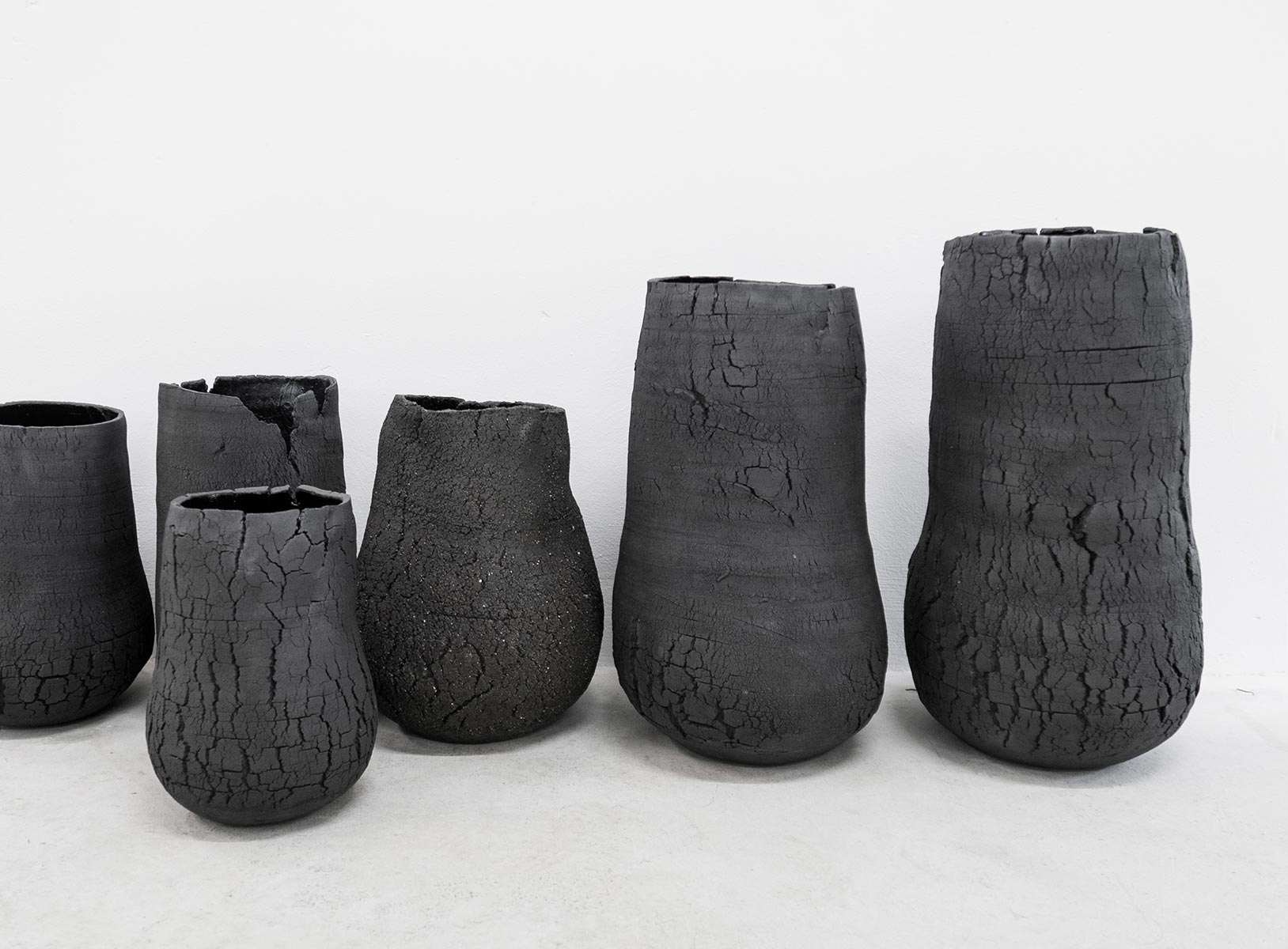
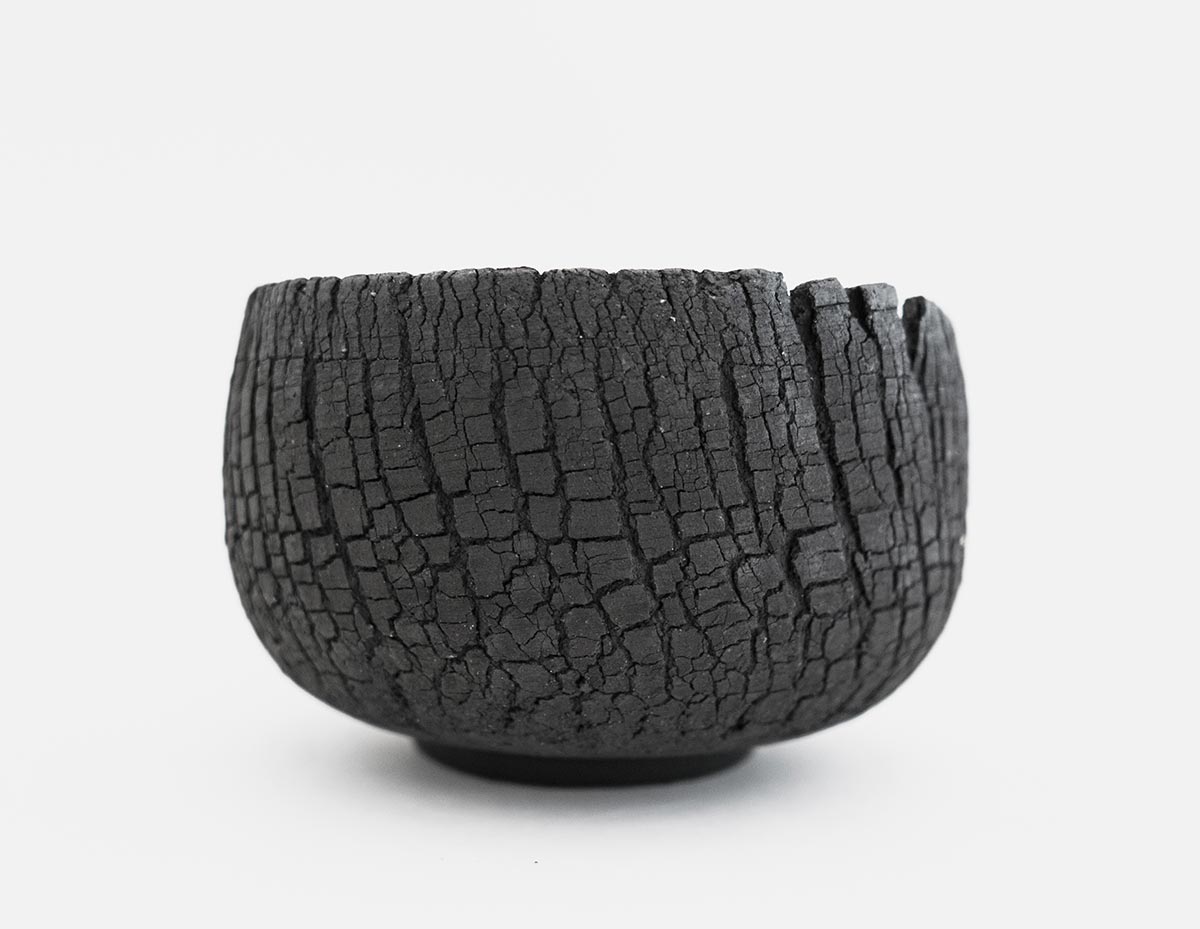
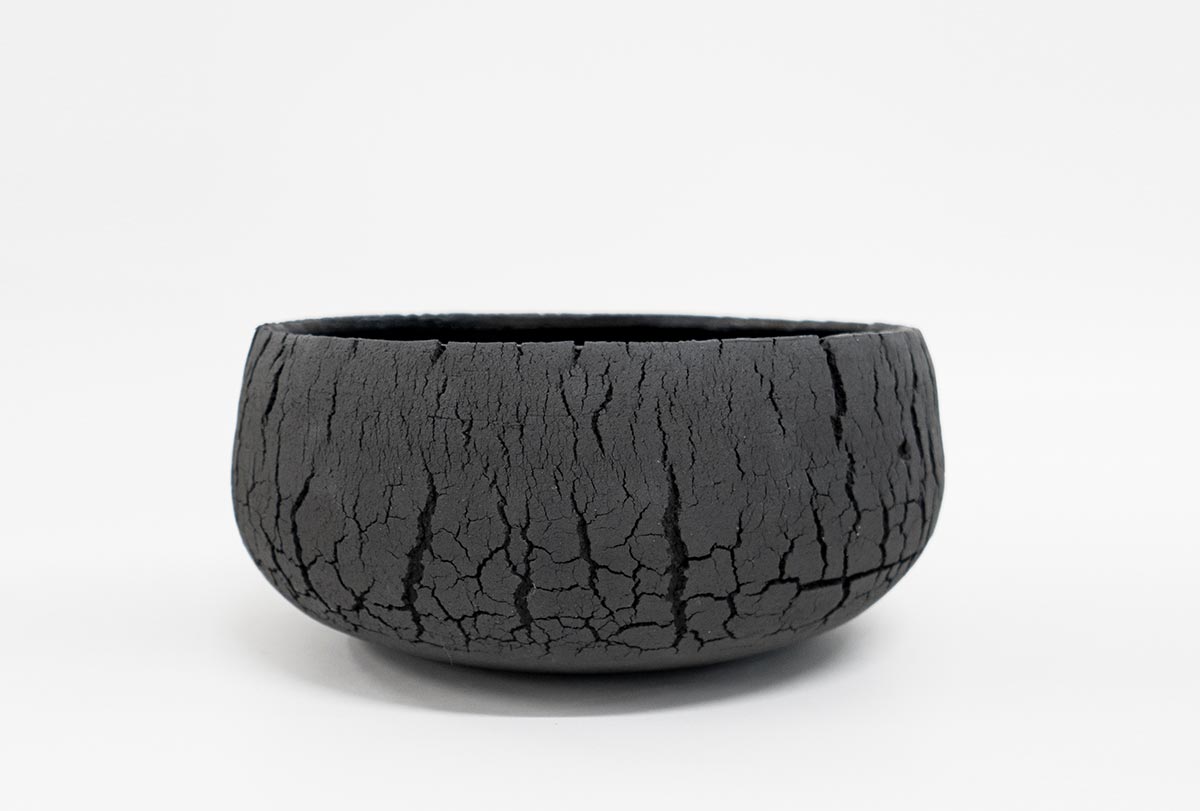
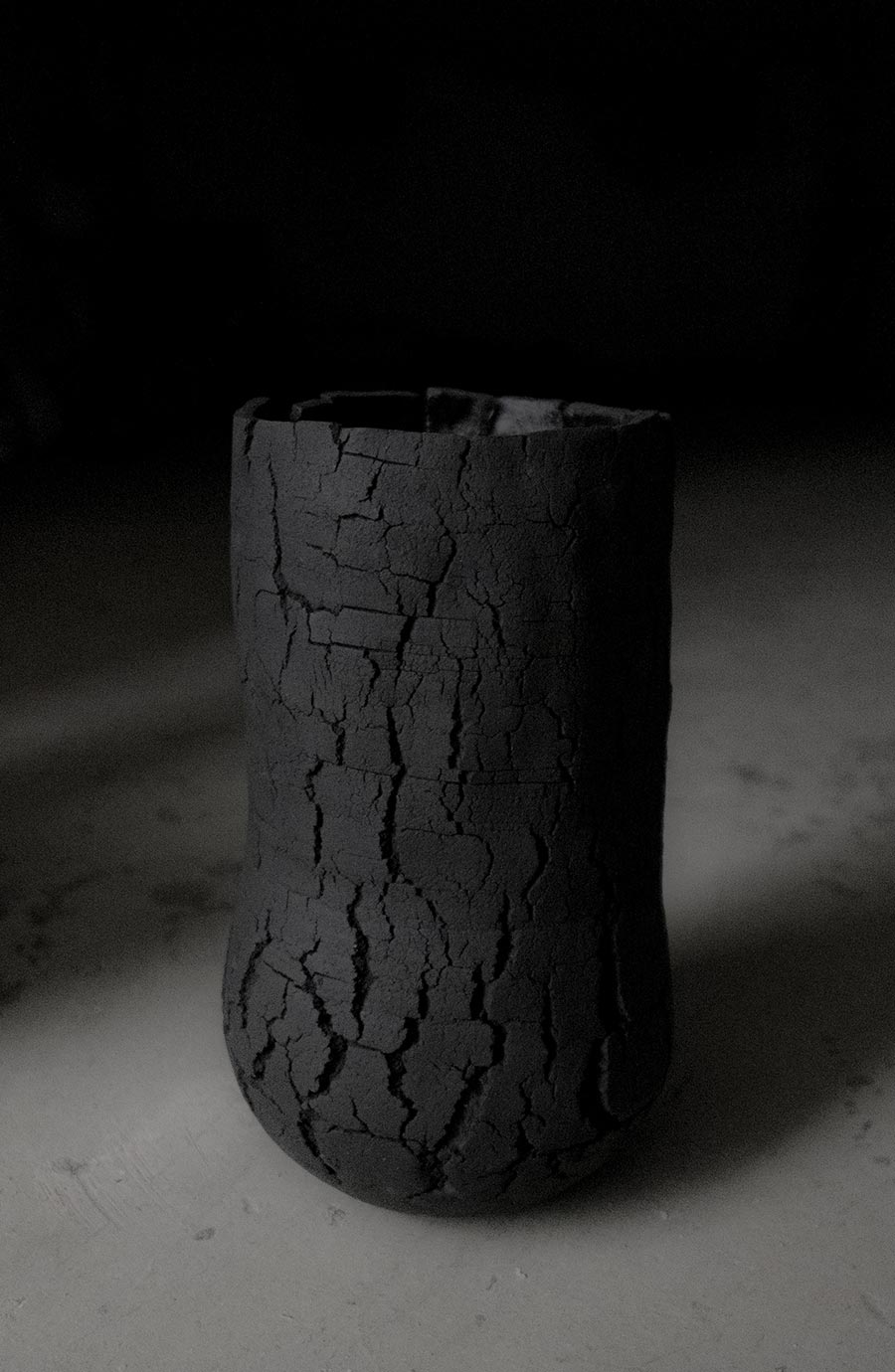
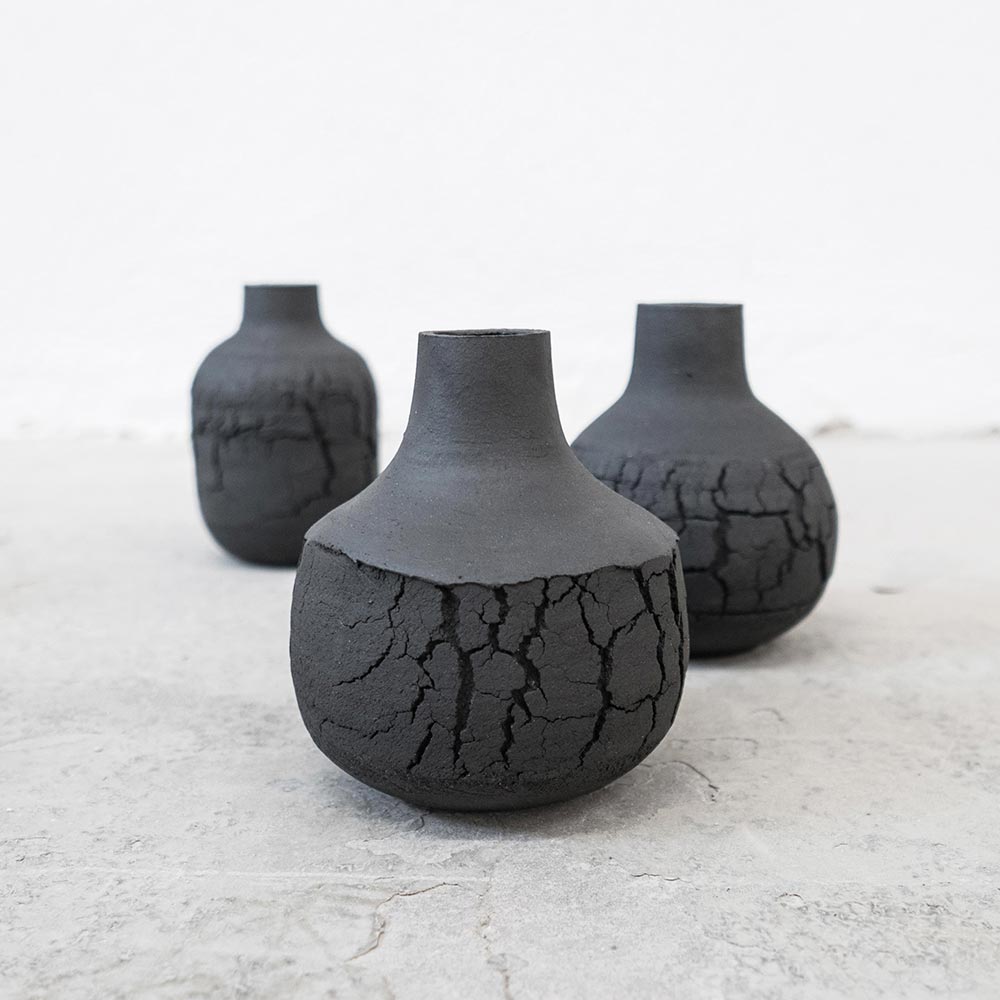
The studio series "Elements of Dry Earth" captures the moment when the earth's surface dries and breaks open into a network of fine cracks. What is normally considered a flaw in ceramic craft takes center stage here. The stoneware clay used in this series undergoes a special transformation during firing—it takes on an intense black, almost charred texture that gives the material depth and character. This creates unique pieces that make the natural processes of the earth visible. The cracks are only surface-deep; the objects themselves are watertight.
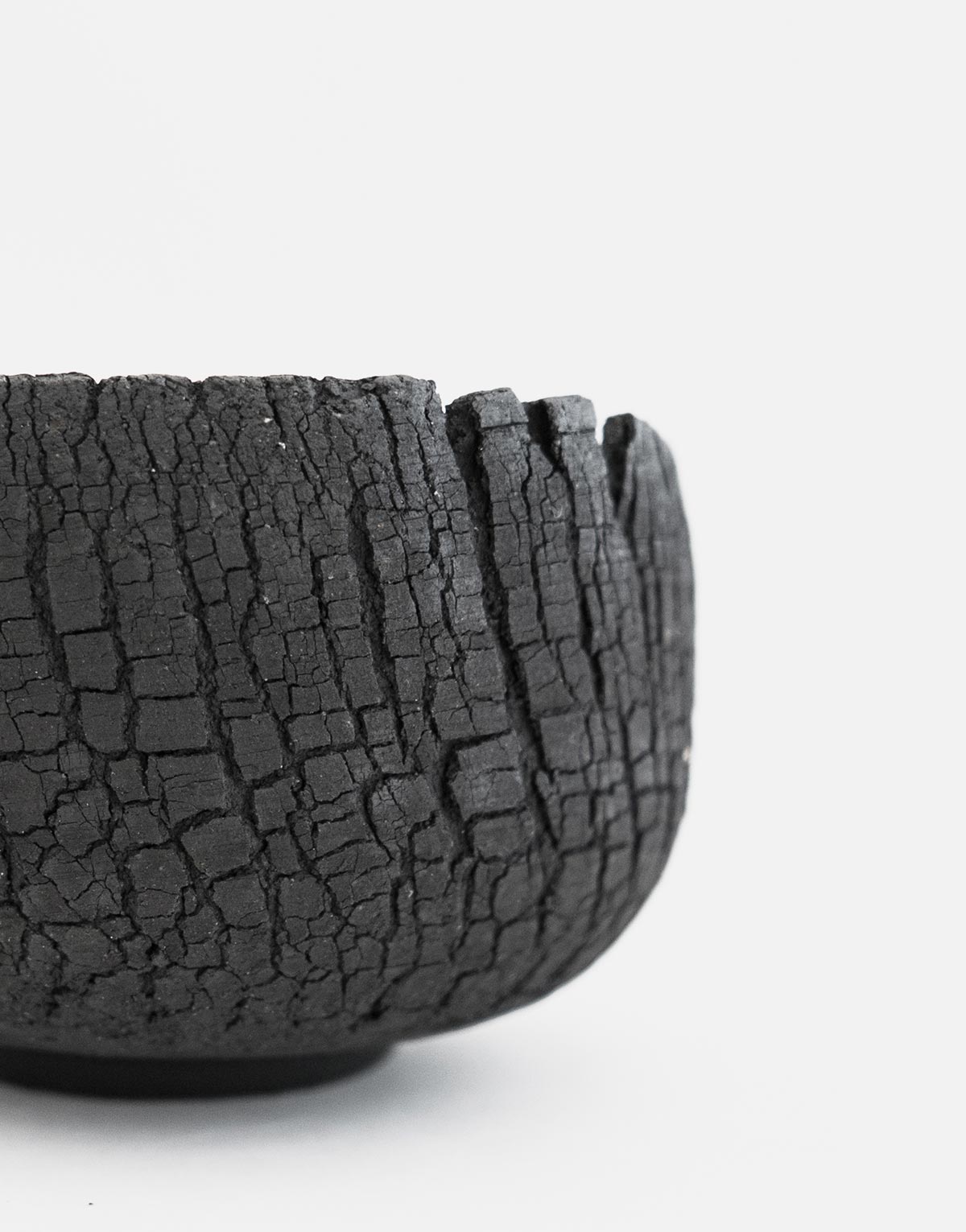
There is a beauty in chance that cannot be created by hand or machine.
Material properties
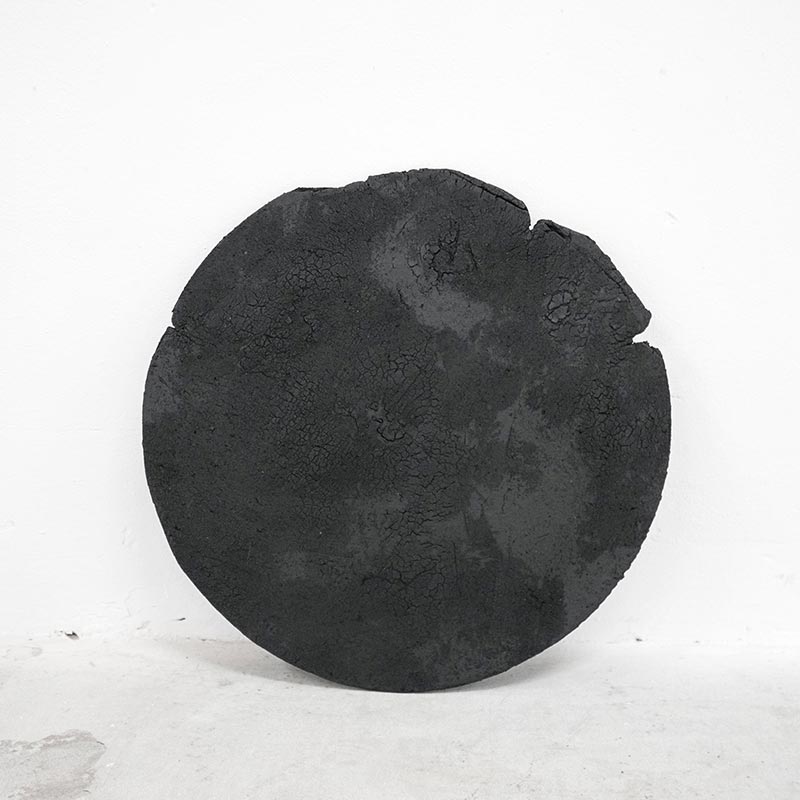
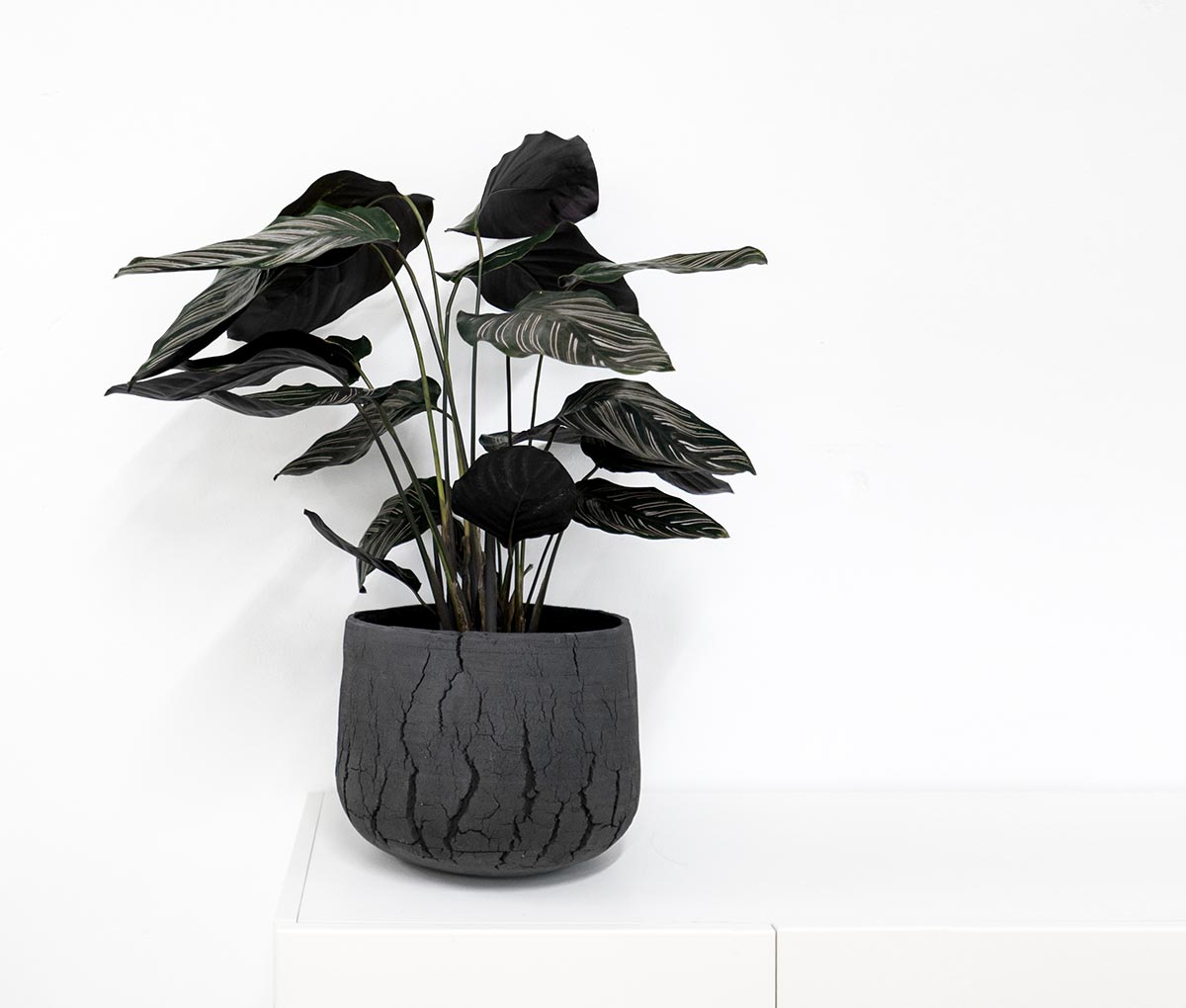
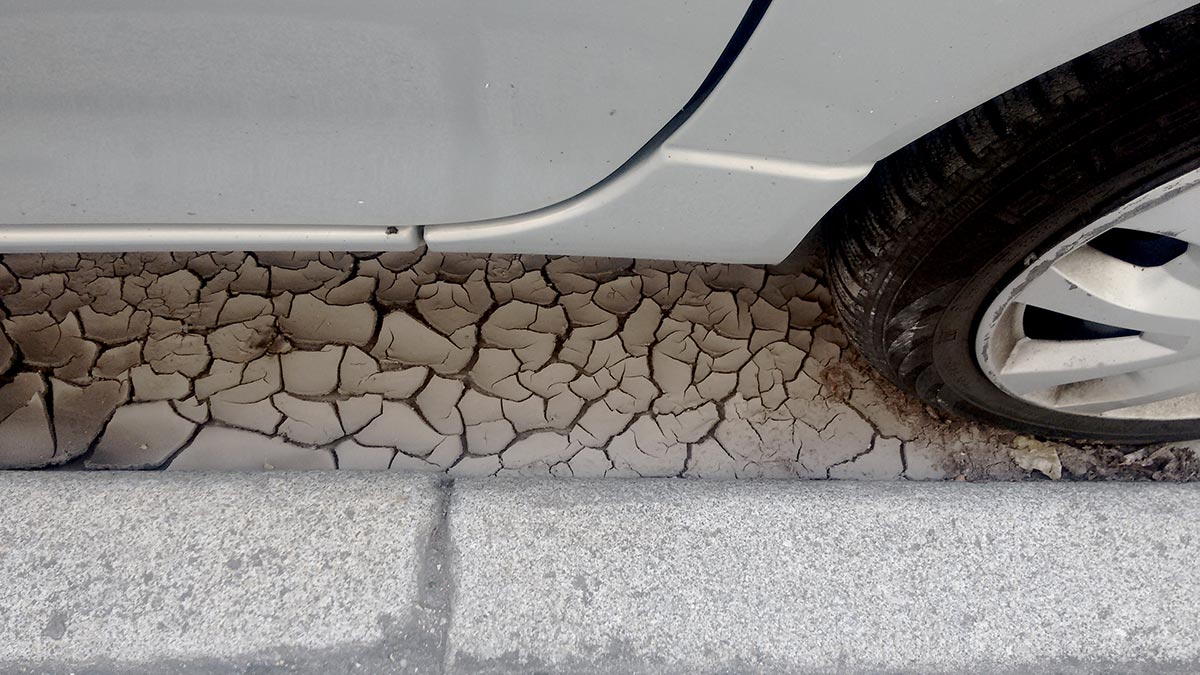
Earth cracks as it dries—this also applies to clay. It is a characteristic material property that affects all types. Yet each clay behaves somewhat differently, with its own distinct character that becomes noticeable when working with it directly. This cracking also feels familiar—something already known, already observed. In ceramic craft, it is often seen as disruptive, a flaw, but in this series it is meant to become visible and take center stage. Combined with the black stoneware clay, the cracked surface appears particularly striking, almost like a piece of charred wood. As a vase or planter, it looks as though flowers and plants are blooming from seemingly dry earth, from ash.
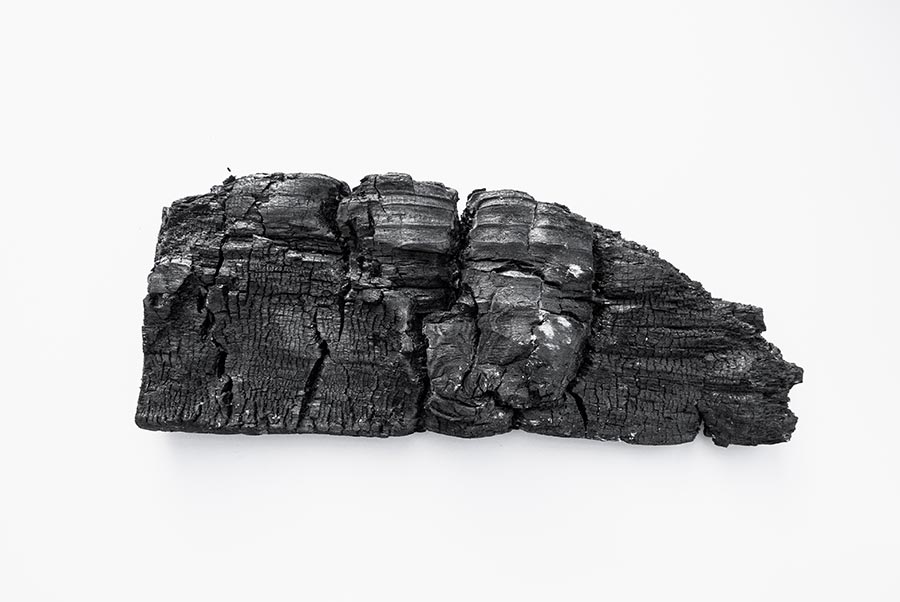
Charred piece of wood
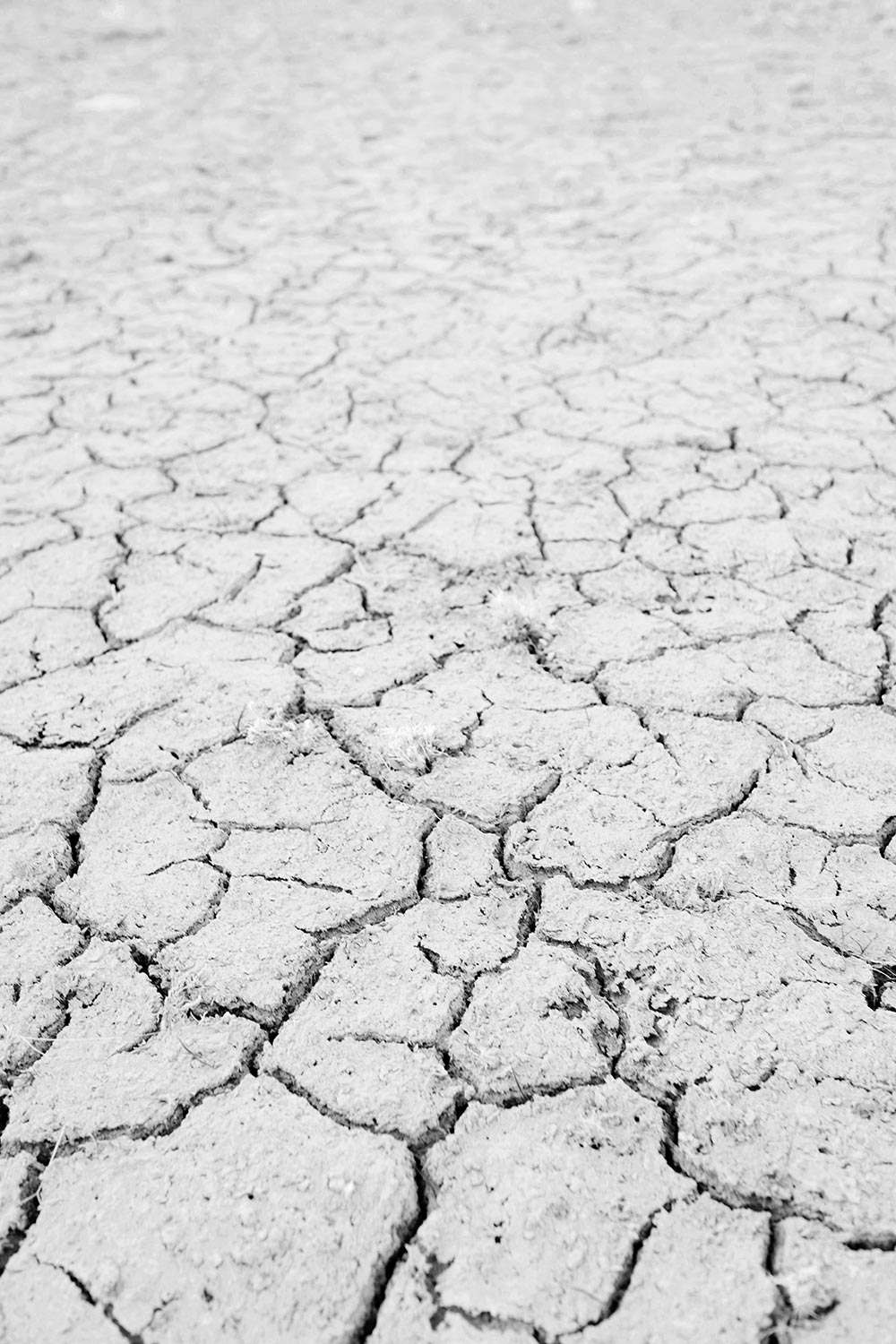
Photo Wesley Tingey
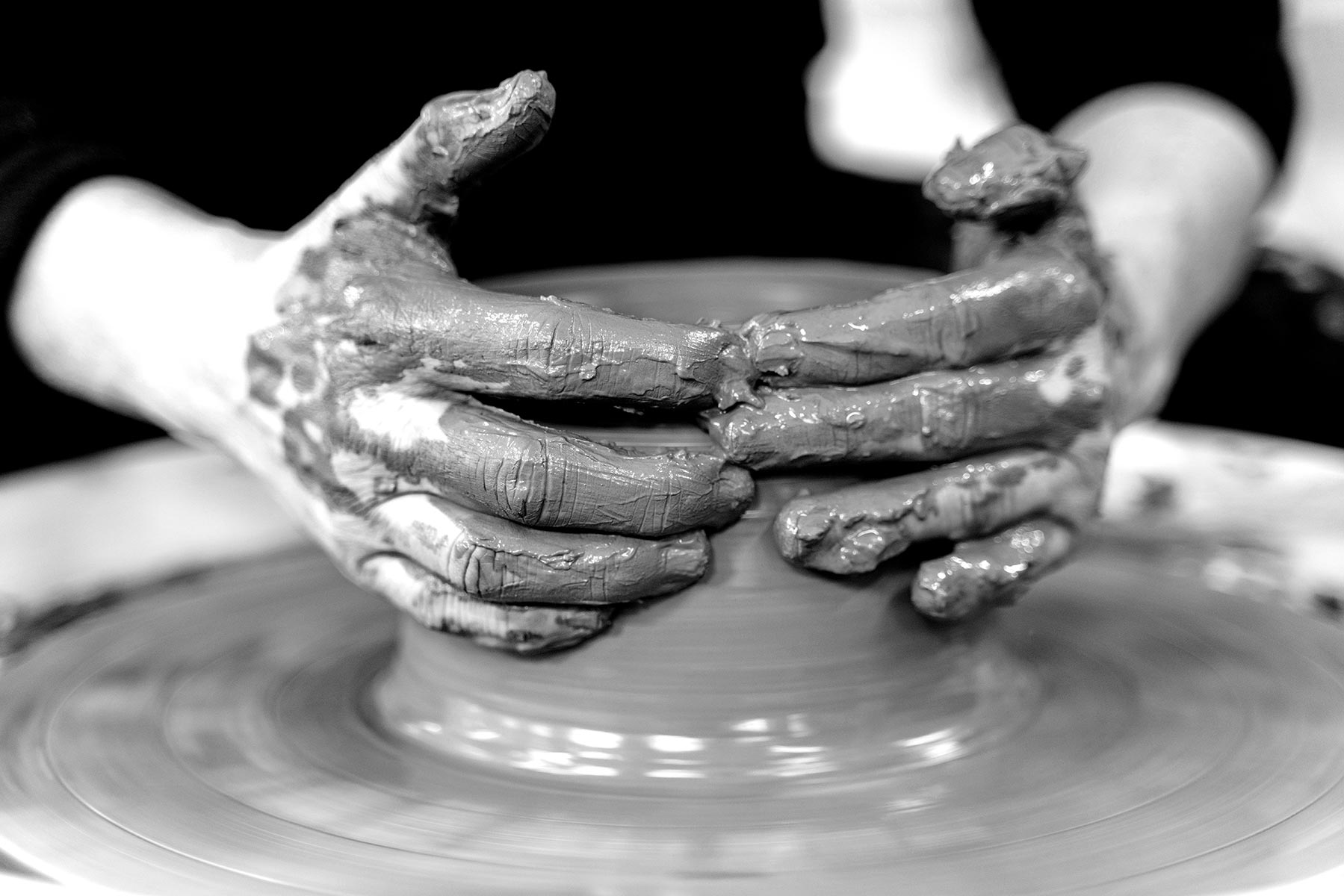
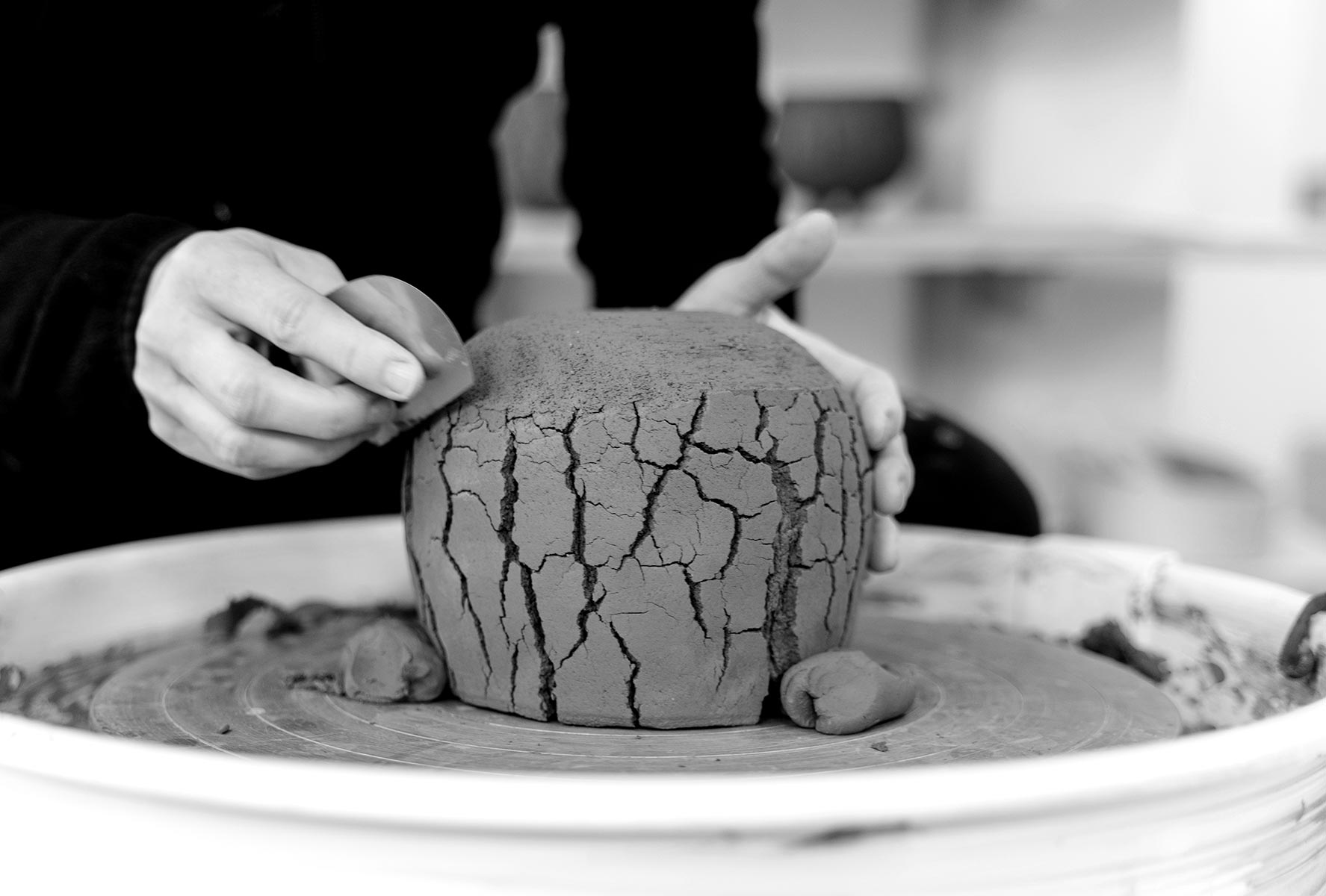
Photo Dominique Brewing
Craft
With enough practice, a person can produce several identical items by hand with incredible precision. But what exactly is the difference between handcrafting and industrial manufacturing?
A key difference is that manual processes are not preprogrammed. In handmade production, it is possible to follow the material more closely and decide during the creative process how much control to apply and how much room to give to the material's distinctive characteristics—and thus also to chance. None of the objects in this series can be mass-produced.
Minimizing Waste
As part of the design, irregularities and chance are not only fascinating, but they also reduce production waste since variation becomes a distinctive feature that is intentionally incorporated.
Resource-Efficient
The focus is on the natural color of stoneware clay, rather than glazes. Colored glazes are completely avoided. Clay and clay waste are collected, processed and reused as much as possible. The manganese clay here is from the Westerwald region in Germany.
Usage
One-of-a-kind, in series
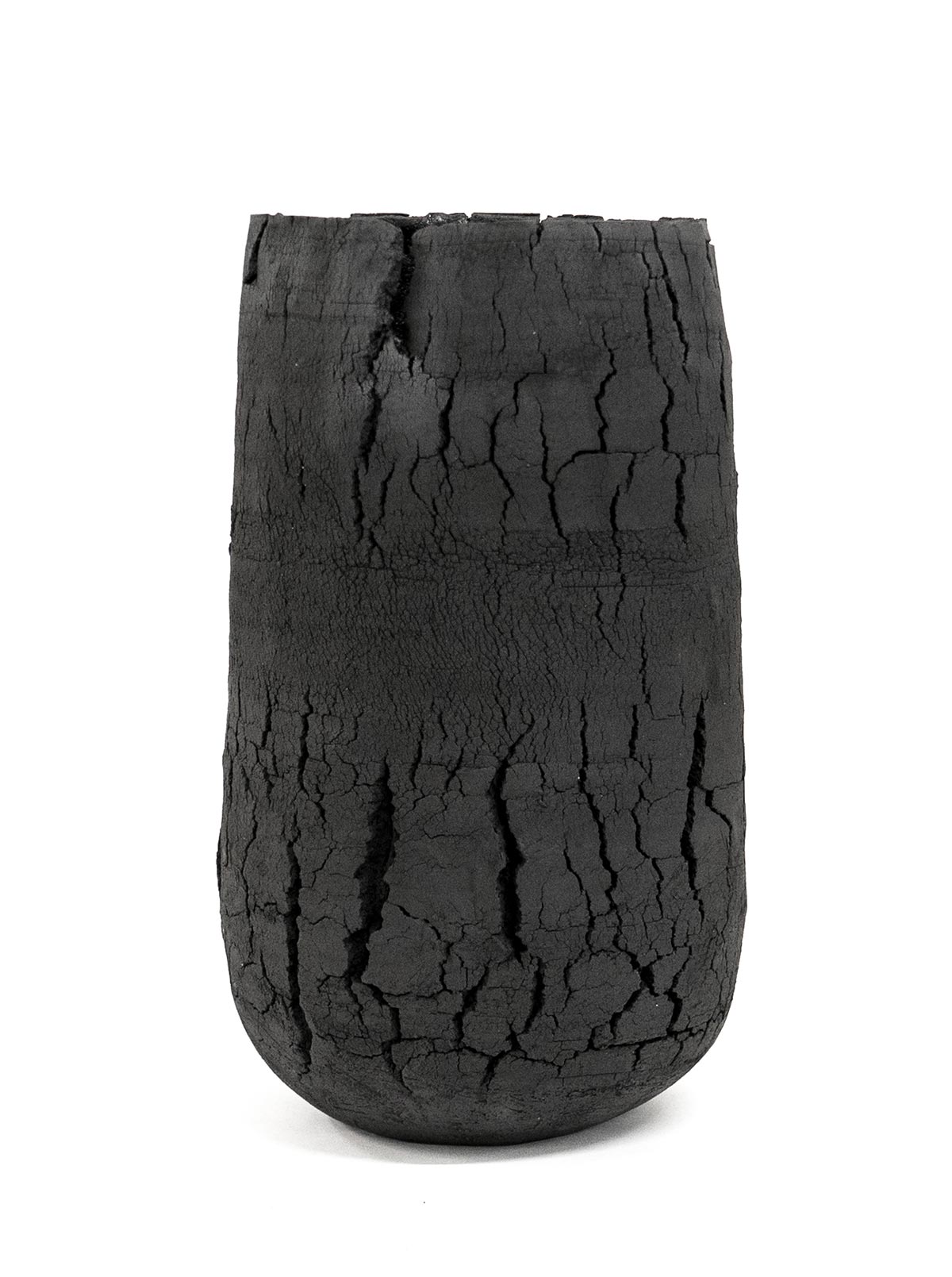
All ceramic objects are designed and crafted by hand in the studio workshop. The distinctive character of the different clay types should remain visible, which is why the objects are left raw on the outside and glazed only on the inside. Irregularities in form and material, as well as the visibility of the craft, are not flaws but intentional design elements. There is a beauty in chance that cannot be created by hand or machine, so the characteristic structures of the objects emerge in an exciting interplay of control and chance—I create the conditions for their formation but leave their exact expression to the material itself.
Some handmade pieces from the series are available in the online store.